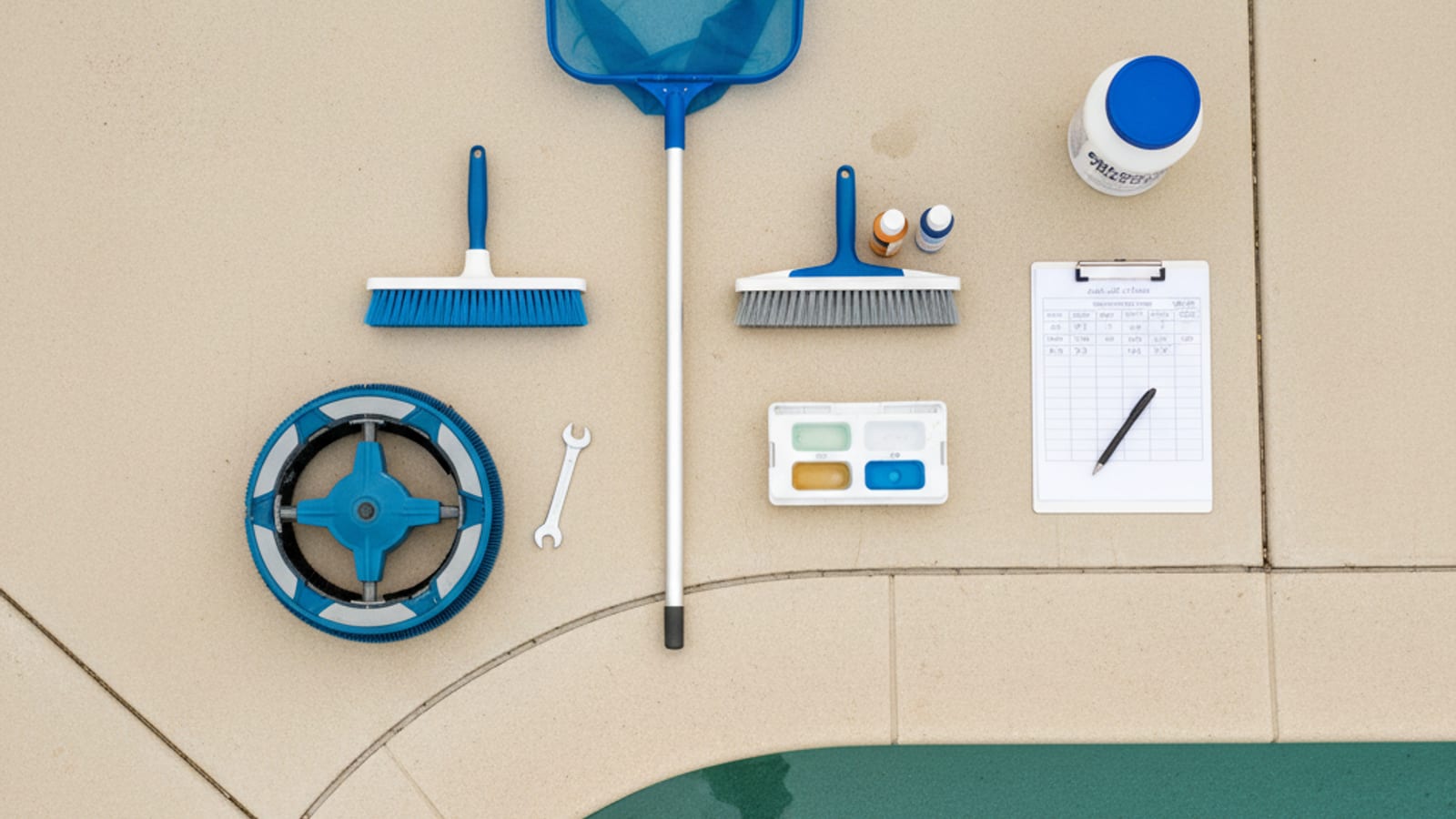
Last year, pros in our network treated 417 green pools across San Diego County. Almost a third of those calls came in during August and September, right when you want to be using your pool the most.
People always ask if algae is worse here than in other places. The short answer is yes. After two decades of pool pros working the county from Oceanside down to Chula Vista, one thing is clear: our sunny weather, hard water, and Santa Ana winds create a perfect storm for algae blooms. But don’t just take our word for it. We started tracking our own service calls to see the patterns, and the numbers tell a pretty clear story.
The Numbers Don’t Lie: Our San Diego Algae Stats
When you’re dealing with a swampy green pool, you don’t care about national averages. You care about what’s happening in your neighborhood. So, we dug into our own service logs from the last full year. This isn’t a scientific study, it’s just real-world data from the pools serviced every day across our network.
Here’s a look at the pool algae san diego statistics we pulled from network work orders.
Algae Blooms by the Month
No surprise here, summer is peak season. The combination of intense sun burning off chlorine and more people using the pool (bringing in sweat, oils, and sunscreen) is a recipe for a bloom.
- Peak Season (July-September): 45% of the network’s total green pool cleanups happened in these three months. August was the absolute worst, accounting for nearly one out of every four algae jobs completed all year.
- Shoulder Season (April-June, October): This period accounted for about 35% of our calls. May and June see a spike as people open their pools for summer and discover problems. October gets a little bump from the Santa Ana winds blowing dust and debris into pools.
- Off-Season (November-March): Only 20% of our algae calls happen in the cooler months. It’s not zero, though. A week of warm, sunny weather in February after a big rain can still trigger a light green bloom if your chemistry is off.
The Real Reasons Pools Turn Green Here
It’s easy to blame the sun, but that’s only part of the story. On a green pool call, the first step is always a water test. The test kit tells the truth every time.
- Simple Low Chlorine (65% of cases): This is the number one reason, hands down. A pump breaks, a chlorinator gets clogged, or someone just forgets to add tablets for a week during a heatwave. The free chlorine level drops to zero, and algae takes over. It’s a fast and aggressive takeover.
- High Phosphates + Low Chlorine (20% of cases): This is the silent killer. Phosphates are algae food. They get into your pool from lawn fertilizer runoff, leaves, dust, and even the local tap water. You can have a decent chlorine level, but if your phosphates are high (over 500 parts per billion), the chlorine can’t keep up. The algae has an all-you-can-eat buffet.
- Circulation & Filtration Issues (10% of cases): A dirty filter or a pump that isn’t running long enough creates dead spots in the pool where water stagnates. Algae loves to start in these quiet corners. We see this a lot with older equipment or homeowners trying to save money by cutting their pump’s run time too short.
- Everything Else (5% of cases): This bucket includes things like extremely high Cyanuric Acid (CYA) which “locks up” the chlorine, crazy high calcium hardness, or a pool party with 30 kids that overwhelms the sanitizer.
These numbers show that most of the time, algae is a basic maintenance issue. It’s not some mysterious force. It’s chemistry and circulation.
Why San Diego is an Algae Hotspot (It’s Not Just the Sun)
So the when and why are clear. But what makes San Diego County, specifically, such a great place for algae to grow? Here are a few theories based on what shows up in the field.
First, our water isn’t easy to work with. Most of our municipal water is imported from the Colorado River. It travels a long way and picks up a lot of minerals. This means our tap water starts with high Total Dissolved Solids (TDS) and often high levels of calcium. Water with high TDS requires more chlorine to stay sanitized. And high calcium hardness can lead to scale, which gives algae a rough, porous surface to cling to. The water quality can vary, too. Water in Poway might have a different mineral profile than water out by the coast in Encinitas.
Second, the Santa Ana winds are a huge factor, especially for pools in East County and the inland valleys. These winds are notorious for dumping tons of fine dust and organic debris into pools. That dust isn’t just dirt; it’s loaded with phosphates and other nutrients. A heavy Santa Ana event can turn a perfectly balanced pool into a cloudy, algae-prone mess in less than 24 hours.
Third, our lifestyle is built around the outdoors. We have beautiful landscaping, but that means leaves, pollen, and fertilizer are constantly finding their way into the water. If you have a gardener who isn’t careful with the leaf blower or over-fertilizes the lawn right next to the pool, you’re basically feeding the future algae bloom. We see this a lot in communities with mature landscaping.
Finally, a lot of pools in older San Diego neighborhoods have original plaster from 20 or 30 years ago. As plaster ages, it gets rough and etched. These microscopic pits and cracks are perfect hiding spots for algae spores, making it much harder to keep the surface clean and sanitized.
The Most Common Algae Pros Fight in North County
Not all algae is created equal. When we get a call, the color tells us a lot about what we’re up against. In our experience, the breakdown is pretty consistent.
Green Algae (About 80% of Cases)
This is the classic stuff. It floats freely in the water, turning it cloudy and green, or clings lightly to the walls. It’s the most common and, thankfully, the easiest to treat. It’s usually a direct result of low chlorine. A good shock treatment, heavy brushing, and running the filter 24/7 will typically clear it up in a few days. It’s an eyesore, but it’s not a deep, systemic problem.
Mustard Algae (About 15% of Cases)
This one is more frustrating. Mustard algae, or yellow algae, looks like a yellowish-brown powder or dust. It often settles in shady spots on the pool floor and steps. It brushes away easily, but it comes right back to the same spot a day later. It’s resistant to normal chlorine levels and can survive even when the water looks clear.
A pool pro had a customer up in the San Elijo Hills last summer with a persistent mustard algae problem. Great pool, beautiful view. But their water hardness was over 500 ppm and their phosphates were through the roof. Every time the Santa Anas kicked up, a fine layer of dust would settle in the pool, providing fresh food. They were fighting these little mustard blooms every three weeks. The solution wasn’t just shocking the pool; it was a multi-step process. The fix required a specialized yellow algae treatment, a phosphate remover to starve it out, and getting the homeowner to clean their cartridge filter more often to remove the dead spores.
Black Algae (About 5% of Cases)
This is the enemy. Black algae isn’t really an algae; it’s a type of bacteria that forms a tough, protective outer shell. It looks like small black spots or tar-like clumps that root themselves deep into the plaster, grout, or pebble finish. You can’t just brush it off. Each one of those spots has a root system.
Getting rid of black algae is a battle. It requires intense scrubbing with a wire brush to break open the protective head, followed by direct application of granular chlorine or a specialized algaecide. Even then, it can come back if you don’t kill every last root. If you see black spots in your pool, don’t wait. It’s one of the few pool problems that gets exponentially harder and more expensive to fix the longer you ignore it.
What These Algae Numbers Mean For Your Pool
Looking at our stats, the takeaway is pretty simple: algae is predictable and preventable. It’s not random bad luck. Over 80% of the green pools treated across the network are caused by low chlorine or high phosphates, both of which are manageable with consistent care.
The most important thing you can do is maintain a consistent free chlorine level between 2.0 and 4.0 ppm. Test your water two or three times a week during the summer, especially after a party or a heatwave.
Second, keep your phosphates in check. Get your water tested at a pool store once a season or have your service tech do it. If your phosphates are above 300 ppb, consider using a phosphate remover like Phosfree or SeaKlear. It’s one of the best preventative measures you can take.
Third, run your pump long enough. You need to turn over the entire volume of your pool water at least once a day. For most pools in San Diego, that means running the pump 6-8 hours in the winter and 10-12 hours in the summer.
If you do end up with a bloom, don’t panic. For a simple green algae problem, you might be able to handle it yourself with a shock treatment and a lot of brushing. But if you’re dealing with stubborn mustard algae or the dreaded black spots, you’ll save time, money, and a lot of frustration by getting professional help. A full-blown algae problem often requires specific chemicals and a process that can be tough to manage on your own. Our green pool recovery service is designed to get your pool back to blue fast, without you having to buy a dozen different chemicals.
Ultimately, the best way to deal with algae is to never let it start. A reliable weekly service that keeps your chemistry balanced and your equipment running properly is the most effective defense. That consistency is what keeps your pool clear and swim-ready all year long, which is the whole point of having a pool in San Diego. It’s about making sure your backyard is a source of fun, not a science experiment. If you’re tired of guessing, our approach to pool service in San Diego, CA is all about keeping things simple and stable for you.
Frequently asked questions
How much does it cost to treat a green pool in San Diego?
The cost varies depending on how bad the algae is and the size of your pool. A light green pool might cost $250-$400 for chemicals and labor. A severe "black swamp" situation could be $600 or more, especially if it requires multiple visits and a filter cleaning.
Is San Diego's tap water bad for my pool's algae risk?
It's not "bad," but it presents challenges. Our local water often has high levels of minerals (TDS) and can contain phosphates, which are food for algae. Test for phosphates at least twice a year and use a remover if they get too high.
What time of year is worst for pool algae in San Diego County?
Based on our service data, August and September are the absolute peak months for algae blooms. The combination of high water temperatures, intense sun burning off chlorine, and increased pool usage creates the perfect environment for algae to thrive.
My HOA in Carmel Valley sent me a notice about algae. What's the fastest way to fix it?
The fastest way is to call a professional. For a quick DIY fix on a light green pool, you'll need to shock it with 2-3 pounds of cal-hypo per 10,000 gallons, brush the entire pool surface thoroughly, and run your filter continuously for 24-48 hours, cleaning it when the pressure rises. This aggressive approach is your best bet to clear it up quickly and satisfy the HOA.
Need professional help in San Diego County?
Splash Pro Pools connects San Diego homeowners with pool pros for the work in this post.