Your pool’s surface feels like sandpaper, the stains won’t brush out, and you’re adding more chemicals than ever. You know it’s time for a change, but the options are a huge investment. Deciding between plaster, quartz, and a pebble aggregate finish isn’t just about picking a color, it’s about choosing a decade or more of durability and enjoyment in your San Diego backyard.
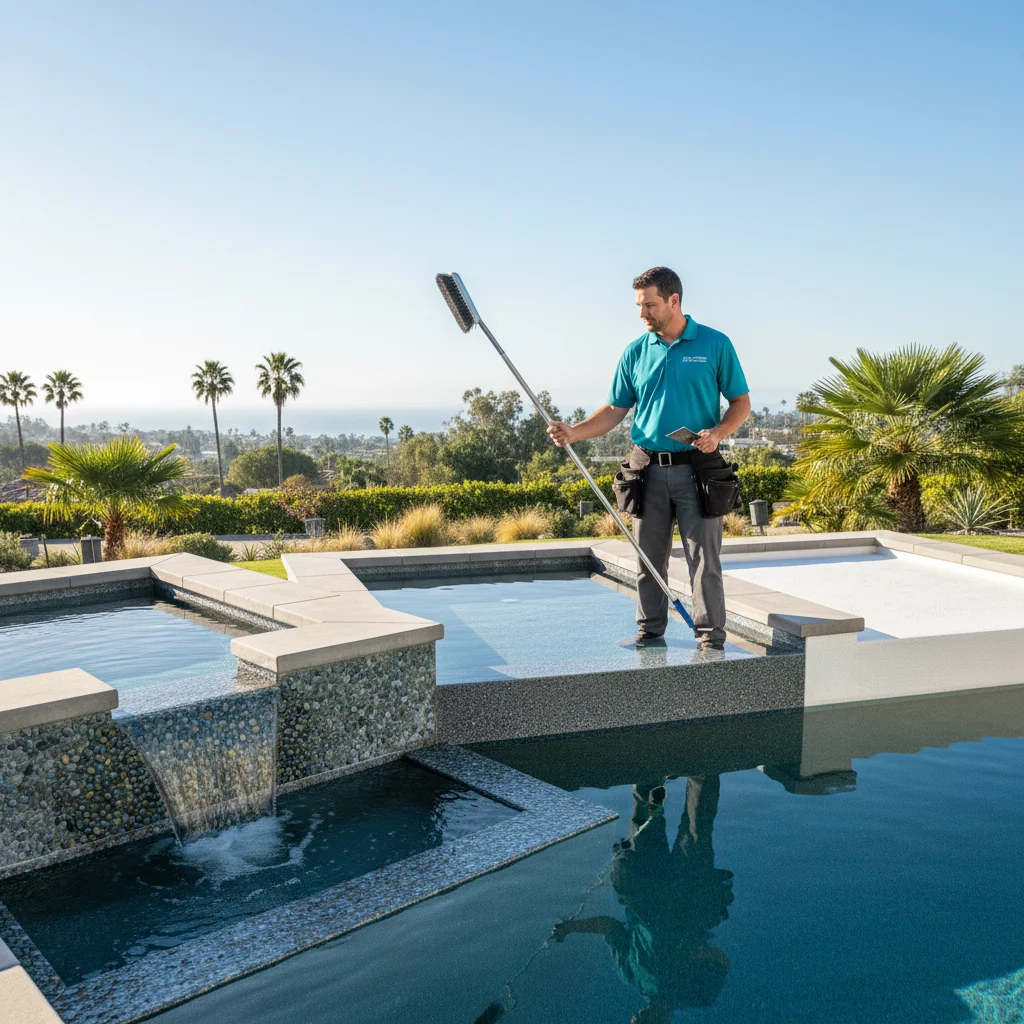
We’ve resurfaced thousands of pools across San Diego County. Here’s our real-world breakdown of how these three popular finishes actually perform in our specific climate and water conditions.
How each finish actually holds up in San Diego water
The Southern California sun and our famously hard water are the two biggest factors that determine how long your pool surface will last. A finish that performs well in a region with soft water and cloudy days won’t necessarily hold up here.
Traditional White Plaster
Plaster is the classic swimming pool finish, a simple mixture of white cement and crushed marble sand (marble dust). It creates that timeless, light-blue water color you see in old Hollywood movies. Its biggest advantage is its low initial cost.
However, plaster is the most porous and softest of the three finishes. In San Diego, it’s in a constant battle with our water, which is rich in calcium and other minerals. This makes it highly susceptible to staining, etching, and scaling if the water chemistry isn’t perfectly maintained. The intense UV radiation we get year-round also accelerates its breakdown. It’s a workable option, but it demands consistent, careful maintenance.
Quartz Aggregate
A quartz finish is a significant step up in durability. It’s made by mixing quartz crystals, one of the hardest minerals on earth, into a polymer-modified cement plaster. This creates a surface that is denser, less porous, and more stain-resistant than standard plaster.
The quartz crystals protect the softer cement material from chemical attack and UV degradation. This makes it much more forgiving to the minor pH and alkalinity swings that are common in residential pools. It also adds a subtle shimmer to the water and comes in a wider variety of colors than plaster. For many San Diego homeowners, quartz hits the sweet spot between performance and price.
Pebble Aggregate
Pebble finishes, like those from brands such as PebbleTec® and Wet Edge®, represent the top tier of durability. This finish consists of small, smooth river pebbles embedded in a specialty cement. The result is a surface that is incredibly tough, non-porous, and resistant to chemicals and staining.
Because the majority of the exposed surface is inert stone, it’s largely unaffected by the challenges of San Diego’s hard water or aggressive pool chemicals. It provides the most natural look, with a range of textures from slightly bumpy traditional pebbles to very smooth polished or “mini” pebble options. While it’s the most expensive upfront, its sheer toughness and longevity make it a leading choice for homeowners who prioritize a low-maintenance, long-lasting surface.
Cost per square foot in 2026, what we’re seeing on jobs
The final cost of a pool resurfacing project depends on the size of your pool, the prep work needed, and the specific material you choose. However, we can provide some general price ranges we’re seeing on jobs across San Diego County in 2026. These are for the finish material and application only; demolition of the old surface or extensive repairs will add to the cost.
Plaster Cost
Standard white plaster remains the most affordable option.
- Typical Cost: $10 - $15 per square foot.
- Example 500 sq. ft. Pool: $5,000 - $7,500.
This is the entry-level price point. It gets your pool looking new, but remember to factor in the shorter lifespan. If you’re on a tight budget or preparing a property for sale, plaster can be a smart financial decision.
Quartz Cost
Quartz finishes sit comfortably in the mid-range, offering a great return in durability for a moderate price increase.
- Typical Cost: $14 - $20 per square foot.
- Example 500 sq. ft. Pool: $7,000 - $10,000.
For roughly 30-40% more than plaster, you get a surface that will last significantly longer and resist stains much more effectively. The variety of colors also allows for more customization of your pool’s aesthetic.
Pebble Cost
Pebble is the premium option, with a price tag that reflects its unmatched durability and long-term value.
- Typical Cost: $18 - $30+ per square foot.
- Example 500 sq. ft. Pool: $9,000 - $15,000+.
The price within this range can vary widely based on the size of the pebbles (mini pebbles cost more) and the exclusivity of the color. While the initial investment is higher, the fact that you likely won’t have to resurface again for over two decades makes it the most cost-effective choice in the long run.
Years of life: real numbers, not manufacturer claims
Product brochures are one thing; how a finish survives year after year of San Diego sun and water chemistry is another. These are the realistic lifespans we see in the field, assuming consistent and proper pool maintenance.
Plaster Lifespan
Manufacturers often claim a 10-year lifespan for plaster. In our experience, that’s optimistic for our area.
- Realistic San Diego Lifespan: 7 to 10 years.
After about 7 years, most plaster pools in San Diego start showing significant signs of wear, such as etching, widespread staining, or “spalling” (flaking). Diligent weekly pool care can push it to the 10-year mark, but rarely beyond.
Quartz Lifespan
Quartz is a big leap forward in longevity. It holds up much better to the daily chemical and environmental stress.
- Realistic San Diego Lifespan: 12 to 18 years.
The harder, less porous surface doesn’t degrade as quickly as plaster. It’s a very reliable performer that gives you nearly double the life of plaster for a relatively modest increase in cost. We often replace original quartz finishes that are 15+ years old and have served the family well.
Pebble Lifespan
This is where your investment truly pays off. Pebble finishes are built to last, and they do.
- Realistic San Diego Lifespan: 20+ years.
It is not uncommon for us to see a 20-year-old Pebble Tec pool that, with a good acid wash and tile cleaning, looks nearly as good as the day it was installed. The material is simply more stable and resistant to the factors that break down cement-based surfaces. The manufacturer warranties are also the longest in the industry, reflecting confidence in the product’s durability.
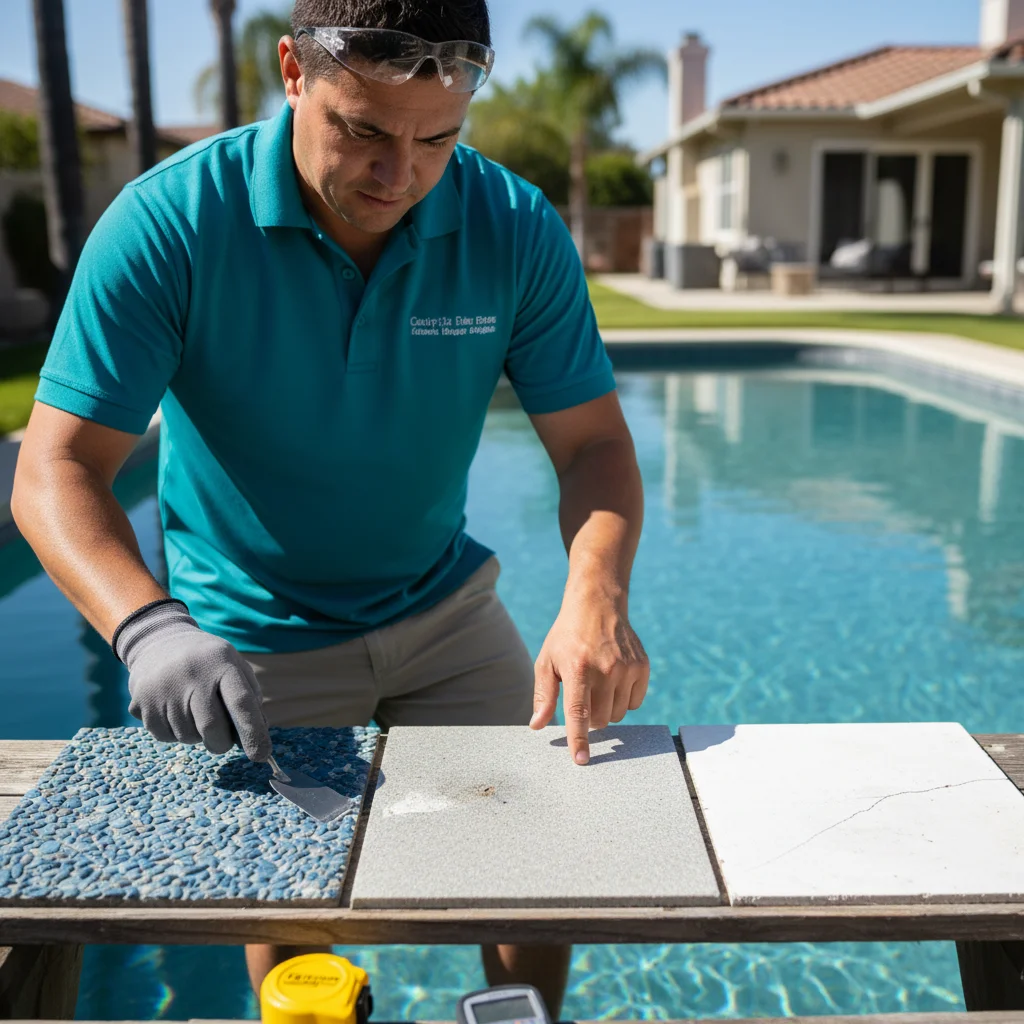
How hard water changes which finish wins
To understand why these lifespans differ so much, we need to talk about San Diego’s water. According to the San Diego County Water Authority, our water is imported primarily from the Colorado River and is considered “hard” to “very hard.” This means it has a high concentration of dissolved minerals, especially calcium carbonate.
This high calcium level is the root cause of many pool surface problems, as we detail in our guide to managing a hard water pool in San Diego. Here’s how each finish copes:
Plaster: The Constant Battle
A plaster surface is soft and porous. When your pool’s pH drifts high, the calcium in the water precipitates out and forms rough, white scale on the surface. This is the notorious calcium buildup you see on pool tiles and surfaces. To combat this, you have to keep the pH and alkalinity on the lower end of the ideal range. But if you go too low, the water becomes aggressive and starts to dissolve the soft marble dust in the plaster, leading to pitting and etching. It’s a delicate, never-ending balancing act.
Quartz: A Stronger Defense
The quartz aggregates in the finish are non-porous and chemically inert. They act like a shield for the cement in the mixture. Scale can still form on a quartz surface, but it has a harder time getting a grip and is less likely to permanently damage the finish itself. The surface is more resilient to the slightly aggressive water chemistry needed to keep calcium in solution, giving you a wider margin for error in your maintenance routine.
Pebble: The Clear Winner
Pebble finishes are the undisputed champions in hard water environments. The pebbles themselves are impervious to chemical attack. The only vulnerable part is the small amount of specialized cement visible between the stones. This dramatically reduces the surface area that can react with the water. As a result, pebble surfaces are highly resistant to both scaling and etching. They are the most stable and forgiving option, requiring less chemical precision to stay looking great for decades. It’s the ideal choice for a low-maintenance pool in San Diego.
Which finish makes sense for which type of pool
The best choice depends on your budget, how long you plan to be in your home, and your tolerance for maintenance.
For the Rental Property or a Quick Fix-and-Flip
If your primary goal is to get a pool looking clean and new for the lowest possible cost, plaster is the logical choice. It restores the pool’s appearance for a few years and satisfies the needs of a short-term owner or tenant. Just be aware that it will require more diligent maintenance from whoever is caring for the pool.
For the Active Family Pool
Quartz is the workhorse for most families. It offers a fantastic blend of durability, aesthetics, and value. It’s smoother on the feet than many pebble options (a plus for kids who play in the pool for hours) and stands up well to the heavy use of a busy summer. It’s the perfect middle-ground solution that will look great for well over a decade with reasonable care.
For Your “Forever Home” or a Salt Water System
If you are investing in your long-term home and want the most durable, lowest-maintenance surface possible, pebble is the answer. The higher upfront cost is easily justified by its 20+ year lifespan, you’ll likely never have to think about resurfacing again. Its resilience also makes it the superior choice for salt water pools, which can be slightly more aggressive on softer cement finishes over time.
When to call us
Choosing and installing a new pool finish is a major construction project. The longevity of your new surface depends entirely on the quality of the preparation of the old surface and the skill of the application crew. This is not a DIY job.
A licensed, insured, and experienced pool contractor ensures the job is done right, from the initial drain and prep to the final acid wash and fill. Always verify a contractor’s license on the CSLB website before signing a contract. We can walk you through the options, provide a detailed quote, and help you choose the perfect finish for your pool and budget.
Call us at (760) 642-1256 for a same-day estimate.
Frequently asked questions
Which pool finish is best for San Diego's hard water?
Pebble aggregate finishes, like Pebble Tec, are the most durable against San Diego's hard, mineral-rich water. They resist chemical etching and calcium scaling far better than traditional plaster.
How much more expensive is a pebble finish than plaster in 2026?
In San Diego County, a pebble finish typically costs 50-100% more upfront than standard white plaster. However, its lifespan is often more than double, making it a better long-term investment.
Can you resurface an old plaster pool with a pebble finish?
Absolutely. The process involves preparing the old plaster surface, usually by adding a bonding agent or chipping it, to create a strong mechanical bond for the new pebble layer. This ensures the new finish lasts.
What is the smoothest pool finish to the touch?
A new plaster or a polished quartz finish will feel the smoothest underfoot. Pebble finishes are naturally textured, though modern 'mini pebble' and polished aggregate options offer a significantly smoother feel than older styles.
Need professional help in San Diego County?
Splash Pro Pools provides every service in this post. Call for a free quote.